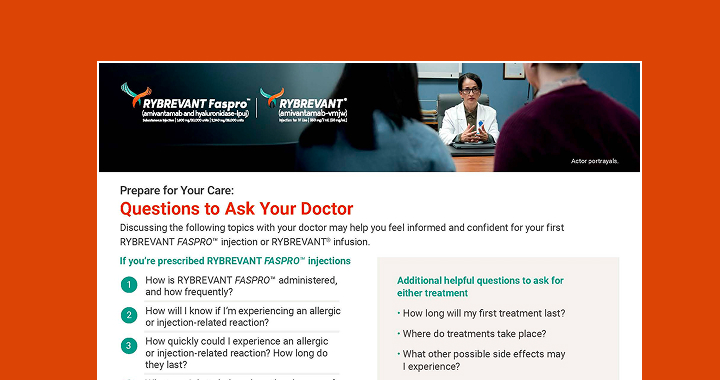

Make a few changes to your daily routine to get the most out of treatment
While you should expect to have some side effects during treatment, there are a few important steps that you can add into your daily routine to lower your risk.
At-Home Care Video
Watch this video to learn about some ways to take care of yourself while on treatment by adding a few steps to your daily routine.

Treatment Experience Tips Flashcard
Daily tips and reminders to help you reduce your risk of side effects.
Learn Tips From a RYBREVANT® Patient
Learn from Lexi, a mother of three, as she talks about how she manages her side effects on RYBREVANT®.
Choose the tab for your treatment below to see how you can prepare for treatment.
Tips to help you prepare for your RYBREVANT FASPRO™ injection appointments





If you have any other questions about your injections, ask your care team.
Daily, at-home steps to manage your treatment experience
These steps may lower the chances of skin-related side effects, such as rash or infected skin around the nail or other side effects. Talk to your doctor about what steps are right for you.

Additional medicines
- Oral antibiotics (for the first 3 months of treatment) followed by an antibiotic lotion for your scalp (for the next 9 months) may be prescribed to reduce risk of skin-related side effects
- Medicine to lower your risk of blood clots will be prescribed for the first 4 months of treatment
Make sure to tell your doctor about any other medicines you are taking. Consider using a pill box to help you organize your medicines.
Mild, ceramide-based moisturizer (such as La Roche-Posay Lipikar or CeraVe†‡)
Use on your face and body (except scalp) at least once a day.

Limit direct exposure to sunlight
Wear protective clothing and broad-spectrum sunscreen with SPF ≥30.

Antiseptic cleanser (such as chlorhexidine 4%)
Use to wash your hands and feet once a day.
†Talk to your doctor about what is right for you.
‡All trademarks are property of their respective owners.
Other tips to help throughout treatment

- Consider bathing/
showering with warm or cool water (not hot water) - Use mild soaps and shampoos for sensitive
skin

- Use laundry detergents made for sensitive skin and without perfumes
- Wear soft, loose-fitting clothing
- Wear gloves during activities that could cause nail infection (for example, cleaning)

- Eat a balanced diet
- Talk to your doctor about activities that feel right for you
- Seek out support from your family, friends, care team, and/or support groups
Talk to your care team to understand if these tips are right for you.
Your care team can help manage or reduce the risk of RYBREVANT FASPRO™ side effects
It's important to tell your care team about side effects right away if you:
- First experience symptoms of side effects
- Feel that the side effects are affecting daily activities
- Have been treating side effects according to your doctor's instructions but they do not improve
Pausing, decreasing the dose, or stopping treatment may be needed in some cases to help manage side effects.

Tell your doctor if you are pregnant or plan to become pregnant. RYBREVANT FASPRO™ injections and LAZCLUZE® can harm your unborn baby.
Tips to help you prepare for your RYBREVANT® infusion appointments





If you have any other questions about your infusions, ask your care team.
Daily, at-home steps to manage your treatment experience
These steps may lower the chances of skin-related side effects, such as rash or infected skin around the nail or other side effects. Talk to your doctor about what steps are right for you.
Additional medicines
- Oral antibiotics (for the first 3 months of treatment) followed by an antibiotic lotion for your scalp (for the next 9 months) may be prescribed to reduce risk of skin-related side effects
- Medicine to lower your risk of blood clots will be prescribed for the first 4 months of treatment
Make sure to tell your doctor about any other medicines you are taking. Consider using a pill box to help you organize your medicines.
Mild, ceramide-based moisturizer (such as La Roche-Posay Lipikar or CeraVe†‡)
Use on your face and body (except scalp) at least once a day.
Limit direct exposure to sunlight
Wear protective clothing and broad-spectrum sunscreen with SPF ≥30.
Antiseptic cleanser (such as chlorhexidine 4%)
Use to wash your hands and feet once a day.
†Talk to your doctor about what is right for you.
‡All trademarks are property of their respective owners.
Other tips to help throughout treatment
- Consider bathing/
showering with warm or cool water (not hot water) - Use mild soaps and shampoos for sensitive
skin
- Use laundry detergents made for sensitive skin and without perfumes
- Wear soft, loose-fitting clothing
- Wear gloves during activities that could cause nail infection (for example, cleaning)
- Eat a balanced diet
- Talk to your doctor about activities that feel right for you
- Seek out support from your family, friends, care team, and/or support groups
Talk to your care team to understand if these tips are right for you.
Your care team can help manage or reduce the risk of RYBREVANT® side effects
It's important to tell your care team about side effects right away if you:
- First experience symptoms of side effects
- Feel that the side effects are affecting daily activities
- Have been treating side effects according to your doctor's instructions but they do not improve
Pausing, decreasing the dose, or stopping treatment may be needed in some cases to help manage side effects.
Tell your doctor if you are pregnant or plan to become pregnant. RYBREVANT® infusions and LAZCLUZE® can harm your unborn baby.
Tips to help you prepare for your RYBREVANT FASPRO™ injection appointments
If you have any other questions about your injections, ask your care team.
Daily, at-home steps to manage your treatment experience
These steps may lower the chances of skin-related side effects, such as rash or infected skin around the nail or other side effects. Talk to your doctor about what steps are right for you.
Additional medicines
- Oral antibiotics (for the first 3 months of treatment) followed by an antibiotic lotion for your scalp (for the next 9 months) may be prescribed to reduce risk of skin-related side effects
- Medicine to lower your risk of blood clots will be prescribed for the first 4 months of treatment
Make sure to tell your doctor about any other medicines you are taking. Consider using a pill box to help you organize your medicines.
Mild, ceramide-based moisturizer (such as La Roche-Posay Lipikar or CeraVe†‡)
Use on your face and body (except scalp) at least once a day.
Limit direct exposure to sunlight
Wear protective clothing and broad-spectrum sunscreen with SPF ≥30.
Antiseptic cleanser (such as chlorhexidine 4%)
Use to wash your hands and feet once a day.
†Talk to your doctor about what is right for you.
‡All trademarks are property of their respective owners.
Other tips to help throughout treatment
- Consider bathing/
showering with warm or cool water (not hot water) - Use mild soaps and shampoos for sensitive
skin
- Use laundry detergents made for sensitive skin and without perfumes
- Wear soft, loose-fitting clothing
- Wear gloves during activities that could cause nail infection (for example, cleaning)
- Eat a balanced diet
- Talk to your doctor about activities that feel right for you
- Seek out support from your family, friends, care team, and/or support groups
Talk to your care team to understand if these tips are right for you.
Your care team can help manage or reduce the risk of RYBREVANT FASPRO™ side effects
It's important to tell your care team about side effects right away if you:
- First experience symptoms of side effects
- Feel that the side effects are affecting daily activities
- Have been treating side effects according to your doctor's instructions but they do not improve
Pausing, decreasing the dose, or stopping treatment may be needed in some cases to help manage side effects.
Tell your doctor if you are pregnant or plan to become pregnant. RYBREVANT FASPRO™ injections and LAZCLUZE® can harm your unborn baby.
Tips to help you prepare for your RYBREVANT® infusion appointments
If you have any other questions about your infusions, ask your care team.
Daily, at-home steps to manage your treatment experience
These steps may lower the chances of skin-related side effects, such as rash or infected skin around the nail or other side effects. Talk to your doctor about what steps are right for you.
Additional medicines
- Oral antibiotics (for the first 3 months of treatment) followed by an antibiotic lotion for your scalp (for the next 9 months) may be prescribed to reduce risk of skin-related side effects
- Medicine to lower your risk of blood clots will be prescribed for the first 4 months of treatment
Make sure to tell your doctor about any other medicines you are taking. Consider using a pill box to help you organize your medicines.
Mild, ceramide-based moisturizer (such as La Roche-Posay Lipikar or CeraVe†‡)
Use on your face and body (except scalp) at least once a day.
Limit direct exposure to sunlight
Wear protective clothing and broad-spectrum sunscreen with SPF ≥30.
Antiseptic cleanser (such as chlorhexidine 4%)
Use to wash your hands and feet once a day.
†Talk to your doctor about what is right for you.
‡All trademarks are property of their respective owners.
Other tips to help throughout treatment
- Consider bathing/
showering with warm or cool water (not hot water) - Use mild soaps and shampoos for sensitive
skin
- Use laundry detergents made for sensitive skin and without perfumes
- Wear soft, loose-fitting clothing
- Wear gloves during activities that could cause nail infection (for example, cleaning)
- Eat a balanced diet
- Talk to your doctor about activities that feel right for you
- Seek out support from your family, friends, care team, and/or support groups
Talk to your care team to understand if these tips are right for you.
Your care team can help manage or reduce the risk of RYBREVANT® side effects
It's important to tell your care team about side effects right away if you:
- First experience symptoms of side effects
- Feel that the side effects are affecting daily activities
- Have been treating side effects according to your doctor's instructions but they do not improve
Pausing, decreasing the dose, or stopping treatment may be needed in some cases to help manage side effects.
Tell your doctor if you are pregnant or plan to become pregnant. RYBREVANT® infusions and LAZCLUZE® can harm your unborn baby.
*Exon 19 deletion or exon 21 L858R substitution mutations.
EGFR+, mutated epidermal growth factor receptor; NSCLC, non–small cell lung cancer.